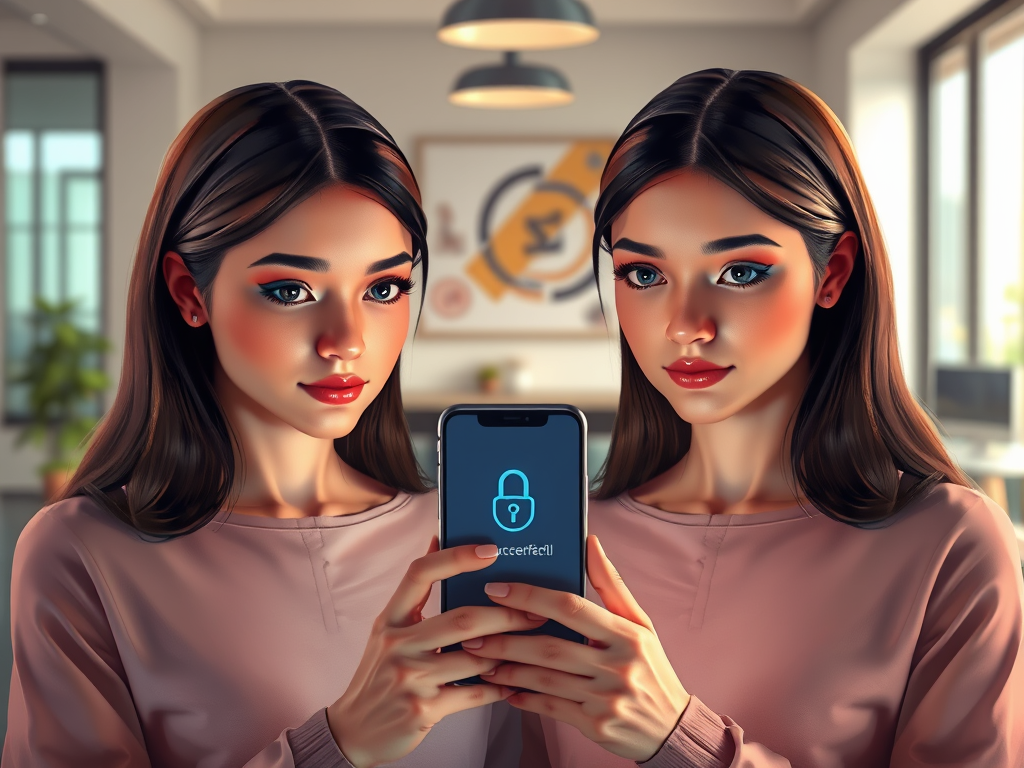
Imagine unlocking your phone or laptop just by looking at it. No passwords, no PINs and just your face. It’s already here. From iPhones to Surface devices, facial recognition has quickly become a popular way to access our tech with ease. But what happens when someone else has your face?
Welcome to the identical twin dilemma.
In today’s tech-driven world, unlocking your phone or computer with just a glance feels like something straight out of science fiction. Facial recognition has quickly become a mainstream security feature, offering convenience and speed without the need to remember passcodes or patterns. But what happens when you share a face — literally?
As an identical twin, I’ve stumbled upon a curious reality: my twin can unlock my devices.
The Promise of Facial Recognition
Biometric authentication, particularly facial recognition, is a solution for secure access. It maps unique facial features; like the distance between your eyes, nose contours, and jawline structure, all to authenticate identity. Apple’s Face ID, Windows Hello, and Android face unlock systems all rely on this principle.
For most people, this works seamlessly. It’s fast, efficient, and pretty hard to spoof… unless, of course, you have an identical twin.
The Identical Twin Loophole
Identical twins share nearly the same genetic makeup. That means extremely similar facial structures. For biometric systems that prioritize convenience over ultra-high security, this is a blind spot.
In my case, my twin can pick up my iPhone and unlock it with ease. The same goes for my Windows laptop with facial sign-in enabled. It’s not a bug. It’s a known limitation.
Apple even acknowledges this in its documentation: “The statistical probability is different for twins and siblings who look like you.” In plain English? If you’re a twin, facial recognition may not be secure.
Why This Matters
While it might seem like a quirky party trick, it raises important questions about biometric security:
- Are your devices truly secure if someone else can access them without your permission?
- How do we balance convenience with the need for more foolproof authentication?
For everyday users, the risk might be acceptable. But in regulated industries, such as finance, healthcare, or legal this could be a compliance issue. It also reminds us that biometrics, while powerful, aren’t perfect.
What You Can Do
If you’re a twin or have a sibling who looks like your clone, here are a few options:
- Add a secondary method: Enable a strong passcode or password as backup.
- Use fingerprint or PIN for critical apps: Some apps offer app-specific authentication.
- Consider multifactor authentication: Especially for work or sensitive data, combine biometrics with another factor like a one-time code or security key.
Facial recognition is undoubtedly a remarkable technology. It’s quick, convenient, and often secure. But for those of us with a biological doppelgänger, it’s a reminder that no system is flawless. Until facial recognition systems can reliably distinguish between identical twins, it’s best to combine it with traditional security measures to keep your digital life safe.
After all, just because someone looks like you, doesn’t mean they should be you, at least not to your devices.





Leave a Reply